LOST in BLUE
- 4.5
- Rating
- 10.00M
- Installs
- Free
- Price

 Analysis by App-foxy
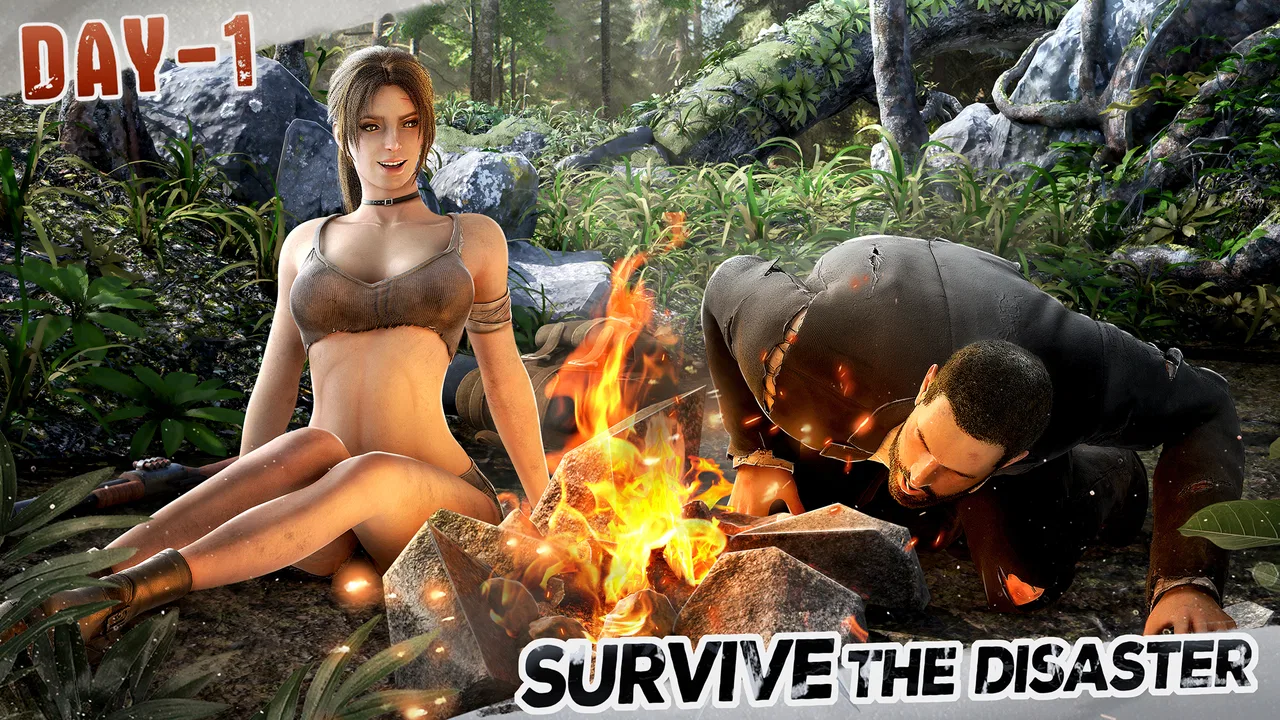
LOST in BLUE is the kind of adventure game that makes a strong first impression because it puts me in a situation I understand immediately: I am stranded, resources matter, and every trip away from safety carries a little risk. Developed by Volcano Force, this free-to-play title turns island survival into a mobile routine built around exploration, gathering, crafting, and the search for a way out. I found the opening hours easy to settle into, especially when I wanted something more involved than a short puzzle but less demanding than a full console-style role-playing game.
The important question, though, is not whether the island can hold my attention for an evening. It can. The more useful question is whether the game deserves a regular place on my phone after the discovery phase has passed. My answer is qualified: it has enough structure to become a dependable survival adventure for the right player, but its long-term appeal depends heavily on how comfortable you are with repetition, gradual progress, and the ongoing maintenance that comes with a free game supported by optional purchases.
What the first week feels like
During the first week, the strongest part of the experience is the steady feeling of having something practical to do. I am not simply walking through scenery waiting for the next story scene. I am making decisions about where to go, what to collect, what to use immediately, and what to keep for later. That creates a satisfying loop: explore a new area, return with useful materials, improve my situation, and then push farther than before.
You May Also Like

 Blood Strike: 2.5 Anniversary
Blood Strike’s Loadouts Turn Every Drop Into a Tactical Gamble
A close look at Blood Strike’s custom loadouts: how fast access to signature weapons reshapes its battle royale rhythm, rewards preparation, and narrows the gap between fights.

 Pandora - Music & Podcasts
Pandora’s Music Is Easy to Start, but Harder to Recover
Pandora’s strength is its low-effort path from a seed to a station. Its weak spot is how much confidence it asks you to place in connection, setup, and quiet recovery.

 8 Ball Pool
 Is Built on Rivalries, Rematches, and Routine
A close look at the rivalries, rematches, shared routines, and unanswered safety questions that turn a quick pool match into a persistent mobile community.

 Samsung Music
’s Quiet Strength Is Playing What You Already Own
Its reach comes less from spectacle than from dependable access to a personal library. That simplicity is both the app’s strongest retention engine and its ceiling.

 AccuWeather: Weather Radar
AccuWeather Review: A Quick, Clear Forecast for Everyday Decisions
For everyday plans, the best forecast is the one you can understand quickly. AccuWeather makes rain timing, radar, and local conditions easy to act on, with a few trade-offs.

 Hill Climb Racing
Why Hill Climb Racing Still Turns Crashes Into One More Run
A tiny car, a bumpy hill and one more upgrade: Hill Climb Racing keeps resurfacing because its simple chaos makes every near-miss feel personal.
More From Our News Desk
View All News


The island setting works well for this structure because the environment itself becomes part of the challenge. A path that looks harmless can lead to a longer trip than expected, while a promising location may require preparation before it is worth visiting. I learned quickly that wandering without a purpose is usually less rewarding than leaving camp with a small plan. Taking the right supplies, clearing space for what I expect to find, and keeping an escape route in mind makes each expedition feel more controlled.
That is one of the game’s better qualities: it gives ordinary preparation a sense of importance. In many mobile adventures, collecting materials feels like tapping through a checklist. Here, the same activity is more engaging when it supports a specific goal. I might gather enough to improve equipment, stock up before exploring a dangerous area, or prepare for a longer session when I will not want to return immediately.
Why the early loop is so approachable
The game does not require me to understand every layer before I can enjoy it. I can begin with the obvious priorities—staying supplied, improving basic tools, and learning the island—and gradually become more efficient. That makes it a comfortable entry point for someone who likes survival themes but does not want a highly punishing simulation.
I also appreciate that the adventure has a clear emotional direction. Survival is not presented as an endless abstract exercise; the possibility of rescue gives exploration a reason. Even when I am focused on collecting materials, the larger objective remains in the background. That helps the early game avoid feeling like a collection of disconnected chores.
For a realistic everyday scenario, I can see myself playing during a commute or after dinner in short sessions. I might spend a few minutes organizing resources and improving my base, then use a longer break to explore. The game accommodates that rhythm better than an adventure that demands a single uninterrupted sitting. Still, the most rewarding progress often comes when I can concentrate, because careless movement or poor preparation can turn a productive trip into wasted time.
What to learn before going farther
My first practical tip is to treat storage and preparation as part of the adventure rather than as housekeeping between missions. Returning from an expedition with a full inventory can be frustrating if valuable materials are left behind or if the next objective requires items I used casually earlier. I get better results when I decide what the next outing is for before I leave.
A second useful habit is to avoid spending every resource as soon as it becomes available. Early upgrades are tempting, but keeping a reserve gives me more flexibility when a new area or task asks for something unexpected. This is especially important for players who dislike backtracking. A little patience at the beginning can save a surprising amount of time later.
The third insight is that exploration should be treated as a series of controlled tests. Instead of assuming that every newly accessible area deserves a full push immediately, I prefer a short scouting trip first. I check how demanding the route feels, note what materials appear, and return before the journey becomes desperate. That approach is less dramatic than rushing ahead, but it makes progress more consistent.
How the game holds up from month to month
After the novelty of the island fades, the game’s value comes from whether its core loop still gives me a reason to return. In my experience, its recurring appeal is strongest when I enjoy gradual improvement. There is satisfaction in looking back at an earlier obstacle and realizing that better preparation, stronger equipment, or a more efficient routine has changed how manageable it feels.
This is not the best choice for someone who needs constant surprise. The basic rhythm remains recognizable: gather, prepare, explore, return, and improve. That consistency is comforting for some players and tiring for others. I can play it regularly when I want a familiar project, but I would not recommend it as the only game on a phone for anyone who quickly loses interest once the main systems become predictable.
The adventure category is crowded with games that focus on combat, narrative scenes, or fast rewards. LOST in BLUE sits closer to a survival-management experience, where the pleasure comes from connecting small actions over time. Compared with a straightforward action adventure, it asks me to think more about supplies and travel. Compared with a heavily competitive mobile game, it feels more personal and less dependent on reacting to other players. That makes it a good alternative when I want a slower, self-directed challenge.
On the other hand, a traditional offline adventure may be better for someone who wants a complete experience with a clear finish and no recurring maintenance. A pure crafting sandbox may also be preferable if building is the main attraction. This game’s particular balance—survival pressure, exploration, and the continuing search for rescue—will appeal most to players who want all three elements working together.
Where recurring value comes from
The game earns repeat visits when I give myself a concrete reason to return. “Play for a while” is less effective than choosing a task such as preparing for a difficult expedition, improving a weak part of my setup, or clearing a route I previously abandoned. This small change in mindset turns routine sessions into purposeful ones.
I also find that alternating activities helps prevent the island from feeling like a work shift. A session devoted entirely to gathering can become dull, while constant exploration can leave me short of supplies. Mixing a short resource run with a focused trip creates a better monthly rhythm. It is a simple approach, but it makes the recurring loop feel less mechanical.
Players who enjoy planning may get more lasting value than players who mainly want immediate rewards. The game rewards attention to what I have, what I need, and how far I can safely travel. That is not flashy, but it gives the experience a layer of decision-making that becomes more noticeable once the initial discovery has passed.
Progression and spending choices
The game is free to download, which makes it easy to try without committing money at the start. Optional in-app purchases range from $0.99 to $99.99 per item, so the spending scale is broad. I would approach those purchases carefully and first decide whether the normal rhythm is enjoyable on its own. If the basic loop already feels like a chore, paying to move through it faster is unlikely to fix the underlying problem.
For me, the sensible approach is to treat purchases as convenience rather than as a requirement for deciding whether the game is worth keeping. I would play long enough to understand how often I return, how much preparation I enjoy, and whether waiting or repeating tasks bothers me. That personal test matters more than the promise of faster progress.
The age rating is Mature 17+, which is another reason I would not recommend installing it casually on a child’s device. Adults choosing it for themselves should still consider whether the survival tone and mature presentation match what they want from a mobile adventure. The game may look approachable at first glance, but its intended audience is not the same as a family-friendly island game.
The maintenance burden behind the adventure
Long-term enjoyment is closely tied to maintenance. I need to keep supplies organized, remember which objectives I am pursuing, and avoid letting several unfinished plans compete for attention. None of that is difficult by itself, but together it creates a regular mental load. This is a game I play better when I am willing to manage it rather than simply react to whatever appears next.
That maintenance can be satisfying when I am in the mood for a project. Preparing for a trip gives a session a clear beginning, and returning with a useful haul gives it a natural conclusion. But on a tired day, the same steps can feel like administrative work. A player looking for instant action may find the preparation slower than expected.
My most effective routine is to finish sessions at a sensible stopping point. I prefer ending after I have returned, sorted important materials, and identified the next objective. Starting the next session with a clear plan removes much of the friction. Logging off in the middle of an uncertain expedition, by contrast, makes the next visit feel like a problem to solve before the fun begins.
Another maintenance tip is to keep a personal priority order. I focus first on whatever improves survivability or reduces unnecessary travel, then on upgrades that support the kind of exploration I am currently doing. This prevents me from scattering resources across attractive but less useful improvements. The game becomes easier to manage when every upgrade has a job.
Why fatigue eventually appears
The main source of fatigue is repetition without a meaningful short-term goal. Gathering the same kinds of materials can be enjoyable when it unlocks a clear improvement, but it loses energy when I am collecting simply because the system expects another stockpile. This is where the game’s long-term design tests my patience.
Travel can also become tiring if I make poor plans. A badly timed expedition may involve returning for one missing item, then making the same journey again. Those moments are not necessarily flaws in the survival concept, but they expose the cost of inefficient play. The island feels more rewarding when I think ahead and more tedious when I do not.
There is also a tension between the game’s relaxed mobile accessibility and its need for attention. It is easy to begin a session, but meaningful progress often benefits from focus. If I am constantly interrupted, I am more likely to forget supplies, waste a trip, or lose track of my priorities. Someone who only wants very short bursts may prefer a game built specifically around instant rounds.
The biggest long-term trade-off is simple: the same preparation that makes survival feel meaningful can also make the game feel like another task. I consider that an honest dividing line. Players who enjoy planning will see depth where others see friction.
Who should make room for it
I would recommend it to adults who like exploration with consequences, gradual upgrades, and a reason to organize resources. It is particularly suitable for someone who enjoys returning to an ongoing world rather than completing a self-contained story in one weekend. The rescue objective gives the island a stronger sense of direction than a completely open-ended crafting game.
I would be more cautious with players who dislike free-to-play progression, repeated gathering, or any game that asks them to maintain an inventory and plan journeys. Someone seeking a fast action game, a competitive match-based experience, or a family-friendly adventure should look elsewhere. A premium offline title may be a better fit if avoiding optional purchases and recurring routines is important.
My long-term verdict
LOST in BLUE has earned its popularity with a clear survival-adventure identity. It has an average rating of 4.5 from around 748 thousand ratings and has passed 10 million installs, which matches my impression that its central loop is easy for many players to understand. Volcano Force has built an accessible island experience where preparation matters, exploration has a purpose, and progress feels more satisfying when I make deliberate choices.
Its current version is 1.296.0, and it runs on Android 6.0 or later. Those details make it approachable for a wide range of Android devices, though the real question is less about access and more about temperament. I would keep it installed when I want a continuing survival project that fits around ordinary life. I would remove it when I notice that I am returning out of obligation rather than curiosity.
My final recommendation is to try it with a clear expectation: this is not merely an island walk and not a nonstop action adventure. It is a routine of preparation, risk, discovery, and recovery. The first week is the easiest part to enjoy, but the game can last beyond that if I set personal goals and accept its repeated structure. It earns lasting space when I enjoy the process of staying ready, not just the excitement of finding something new.
For me, that makes it a worthwhile free adventure with genuine staying power, but not an automatic recommendation for everyone. I would suggest giving it a fair trial without rushing into purchases, learning to plan expeditions early, and paying attention to whether its maintenance feels rewarding or exhausting. If the island’s steady rhythm suits you, it can become a reliable companion for longer sessions and short daily check-ins alike. If you want immediate thrills with minimal upkeep, the rescue mission may be better left to another game.
FAQs for LOST in BLUE
01What is LOST in BLUE about?
LOST in BLUE is a survival adventure game in which you play as a plane-crash survivor stranded on a mysterious island. You must explore different areas, collect resources, craft tools, build and improve a shelter, and uncover the island’s secrets. The game also includes combat, puzzles, character progression, and encounters with other survivors and dangerous creatures.
02Can I play LOST in BLUE offline?
LOST in BLUE is primarily designed as an online experience, so an internet connection may be required for important features such as account access, cloud data, events, updates, social functions, and server communication. Although some parts may appear playable after loading, you should not expect the complete game to work reliably offline. A stable connection is recommended.
03Is LOST in BLUE free to download and play?
LOST in BLUE can generally be downloaded for free, but it includes optional in-app purchases. These may provide premium currency, resource bundles, cosmetic items, progression advantages, or convenience features. You can make progress without spending money, although construction, upgrades, and some timed activities may require patience. Parents should also review purchase settings before allowing children to play.
04What kind of gameplay and controls does LOST in BLUE offer?
The game combines exploration, resource gathering, crafting, base management, missions, and real-time combat. Touch controls are used to move your character, interact with objects, collect materials, and attack enemies. The interface is fairly accessible for newcomers, but the number of menus, upgrade systems, tasks, and survival mechanics can feel overwhelming until you become familiar with the island and organize your priorities.
05Does LOST in BLUE require a powerful phone or tablet?
LOST in BLUE features detailed environments, animated characters, combat effects, and large areas to explore, so performance depends on your device. Newer mid-range and high-end Android or iOS devices should provide a smoother experience, while older phones may experience longer loading times, reduced graphics quality, heating, or battery drain. Make sure your device has sufficient storage and keep the app updated.
Pros
- Strong survival atmosphere with exploration
- crafting
- and resource management.
- Base-building mechanics give progression beyond simple combat.
- Cooperative features make surviving and developing your camp more engaging.
- Varied environments provide new challenges and visual variety.
- Regular missions and events help keep the gameplay active.
Cons
- Energy and resource limits can slow progress during longer play sessions.
- Some upgrades and items may require significant grinding.
- Combat can feel repetitive after extended gameplay.
- The interface may seem crowded for new players.
- Online features can reduce enjoyment when the connection is unstable.

LOST in BLUE
Gallery